
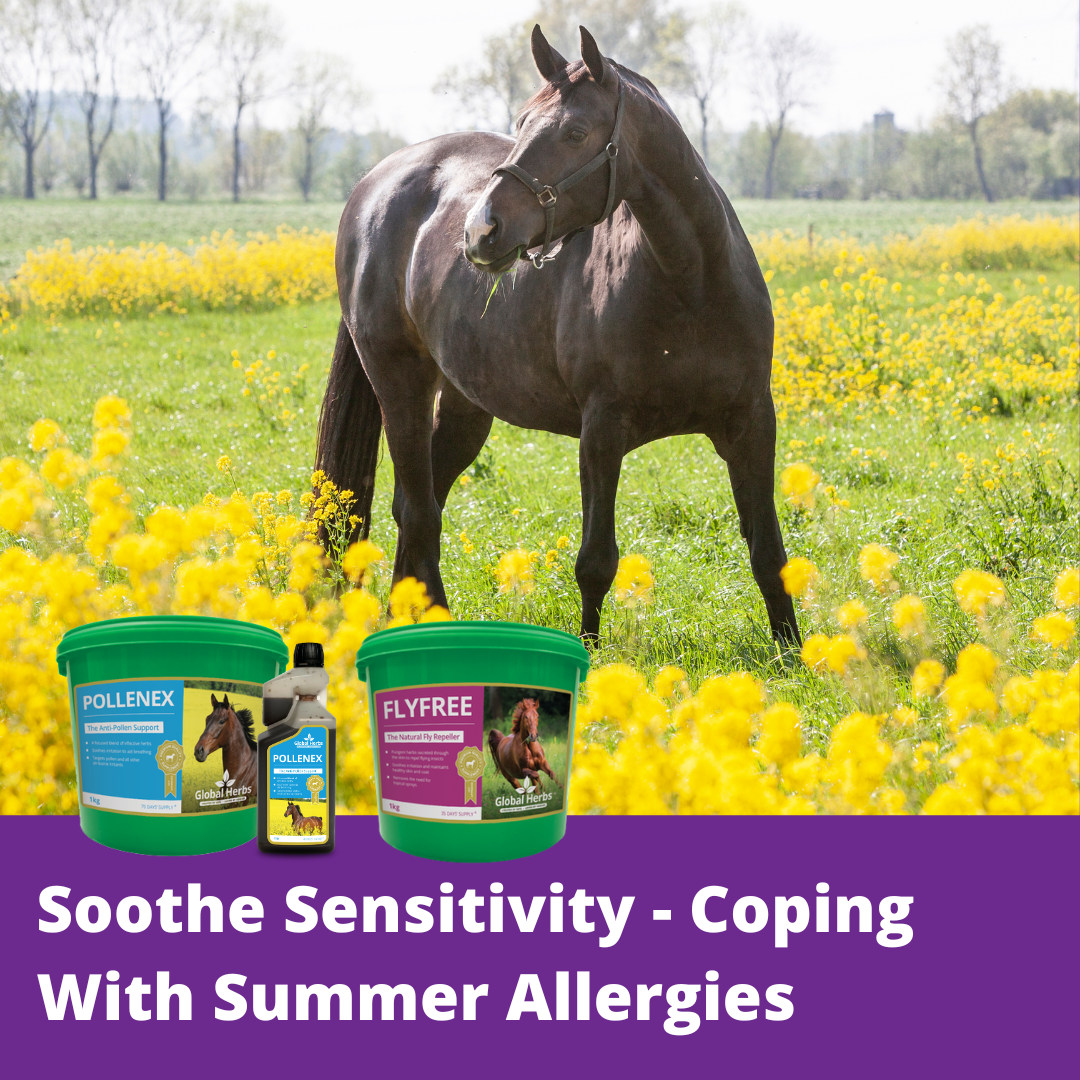
Summer allergies in horses are often triggered by allergens identified by the horse as a 'threat' resulting in the immune system producing an inappropriate or hypersensitivity response know as an allergic reaction. During the summer months allergens will often include insect saliva (when they bite) and pollens (grass, trees, and weeds).
Symptoms can be seen with the skin:
- Itching
- Hives
- Rubbing the tail base and mane
Or with their breathing:
- Nasal discharge
- Increased mucus production
- Increased respiratory rate
- Heave lines (long term)
- Mild exercise intolerance
Avoiding allergens when possible is recommended with changing grazing patterns and timings alongside fly and pollen repellents. However, there will be times when additional measures are required such as supplements and sprays to help manage your horses symptoms.
Skin Allergies
For horses affected by allergies triggered by biting insects, additional skin and immune support can be highly beneficial during the summer months. Allergic reactions to midge and fly bites can commonly lead to itching, rubbing, irritated skin, and seasonal discomfort, particularly around the mane, tail, and belly.
FlyFree is a carefully formulated herbal supplement designed to support horses during fly season from the inside out. It contains a blend of herbs traditionally used to support skin health, maintain comfort, and help horses cope with seasonal insect irritation.
Used alongside good fly management practices such as masks, rugs, and repellents, FlyFree can help support horses prone to sensitivity during the warmer months and throughout peak insect activity. Benefits of FlyFree –
- Pungent herbs secreted through the skin to repel insects
- Soothes insect bites, runny eyes, and soreness
- Promotes skin and coat health
- Fast-acting support for quick relief
Respiratory Allergies
PollenEx has a unique blend of herbs which supports the respiratory system during high pollen counts in summer providing soothing comfort from irritating airborne particles and allergens. PollenEx contains three main ingredients:
- Liquroice, which contains glycyrrhin, and acts as an anti-inflammatory reducing airway irritation and loosens upper airway mucus.
- Kantakari is also a natural expectorant and anti-inflammatory, removing excess mucus for conditions such as allergies and chronic coughing.
- Malabar nut is widely used to manage allergic respiratory conditions as is also a potent anti-inflammatory but also has bronchodilatory and anti-histamine properties.
Mixed with potent anti-inflammatory and anti-oxidant herbs such as Turmeric and Albizia Lebbeck, PollenEx creates a daily supplement to add to our horses feeds to use during our allergic summer months.
Alternatively, Eyebright is a natural herb renowned for its ability to support clear eyes and sinuses by helping to reduce mucus production. Ideal for horses prone to seasonal allergies, its soothing properties provide comfort for irritated eyes. Helping to –
- Reduce mucus production
- Aid clear eyes and sinuses
- Provide soothing action for irritated eyes
Overall, summer allergies can affect horses in many different ways, from skin irritation and itching to respiratory discomfort and sensitivity to airborne allergens. Alongside practical management, targeted nutritional support can play an important role in helping horses stay comfortable throughout the warmer months.
Frequently Asked Questions
What are the most common summer allergies in horses?
Summer allergies in horses can be triggered by a variety of environmental allergens, including insect bites and saliva, pollen from grass, trees and weeds, and other airborne particles. Horses may show signs affecting their skin, eyes or respiratory system.
What are the signs of allergies in horses?
Signs can vary depending on the allergen and the individual horse. Common signs include itching, rubbing the mane and tail, hives, nasal discharge, increased mucus production and changes in breathing. Some horses may also show mild exercise intolerance.
Can horses be allergic to pollen?
Yes. Horses can experience sensitivity to airborne allergens such as grass, tree and weed pollen. During periods of high pollen, some horses may show respiratory or eye-related signs such as increased mucus, nasal discharge or irritated eyes.
How can I help my horse during allergy season?
Reducing exposure to known allergens where possible can help. Management may include adjusting grazing times, using appropriate fly protection, reducing exposure to dusty environments and maintaining good stable ventilation. Targeted nutritional support may also be useful as part of an overall management plan.
What can I do for a horse with insect-related skin sensitivity?
Good fly management is an important first step. Fly rugs, masks and appropriate repellents can help reduce exposure to biting insects.
What is FlyFree used for in horses?
FlyFree is a herbal supplement designed to provide nutritional support during fly season. It contains herbs traditionally used to help deter flies and support skin health during periods of increased insect activity.
What is PollenEx used for in horses?
PollenEx is a herbal nutritional supplement designed to support the respiratory system during periods of high pollen. Its formula contains herbs traditionally used to help maintain normal breathing and healthy respiratory function.
Can horses' eyes be affected by seasonal allergies?
Yes. Seasonal environmental allergens can contribute to watery or irritated eyes and increased mucus in some horses.
When should I contact a vet about my horse's allergies?
If your horse develops significant breathing difficulties, persistent coughing, marked nasal discharge, severe skin irritation or symptoms that are worsening or not improving, seek veterinary advice. Your vet can help identify potential causes and recommend appropriate management.
Blog by Jo Holt MRCVS
Share:
The Spring 'Fizz' - How Calmers Can Help This Season
Hoof Care - Keeping Hooves Happy in Dry Weather